
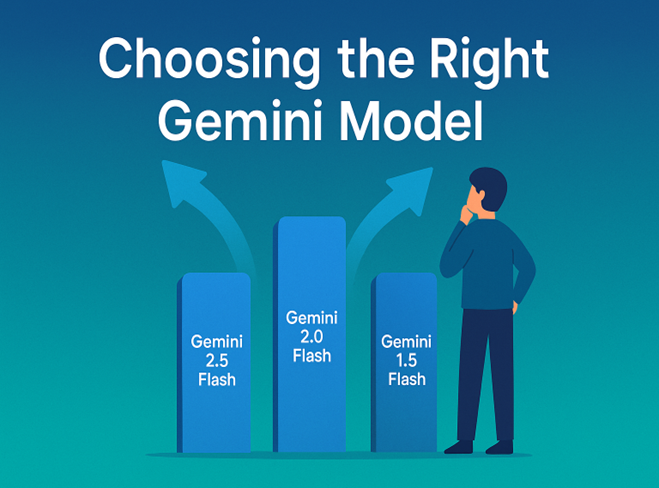
Introduction : Why I Created This Guide
With the growing variety of AI models available today, selecting the right one for your specific app or use case can be challenging — especially when you’re just starting out. This guide provides a clear and structured overview of Gemini, Google’s family of multimodal AI models, helping you understand which model fits best based on your goals, data type, and budget.
Whether you’re building a chatbot, a document summarizer, or a creative content generator, this guide lays out the key differences across Gemini models in a simple, comparison-focused format. You’ll also find a use-case mapping table and a sample user flow diagram that reflect the kind of decision-making and process documentation common in structured product development environments.
What Is Gemini and Why Should You Care?
Gemini is a collection of advanced AI models developed by Google, designed to process:
- Text
- Images
- Audio
- Video
These models are used in applications such as chatbots, writing assistants, image generation, document summarization, and real-time interactions.
Popular Gemini variants include:
- Gemini 2.5 Pro
- Gemini 2.5 Flash
- Gemini 2.0 Flash
- Gemini Flash-Lite
- Gemini 1.5 Pro / Flash-8B
- Live API, Imagen 3, and Veo 2
Each model is optimized for different needs. The challenge is choosing the right one — and that’s where structured comparison helps.
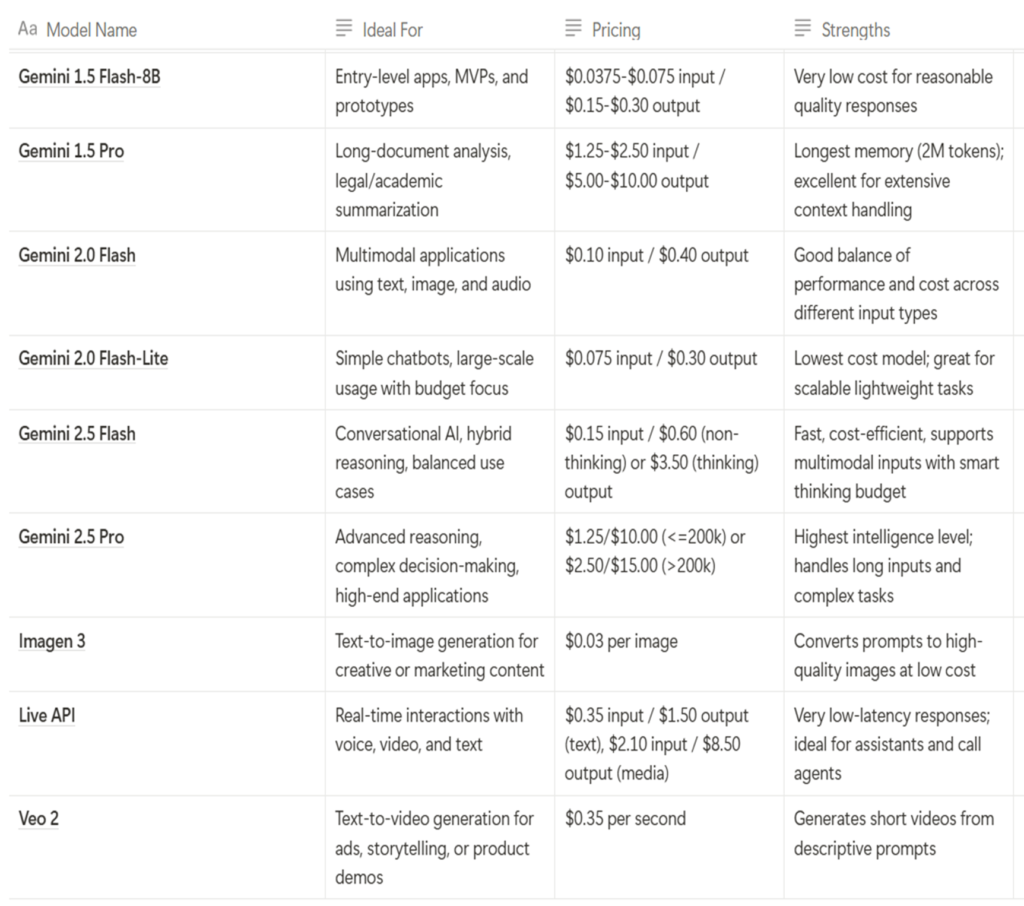
Gemini Model Comparison Table
The following comparison table summarizes key Gemini models, their target use cases, and pricing.
I prepared this table using Notion for visual clarity and flexibility. I have attached the screenshot below for reference.
Mapping Gemini Models to Project Type
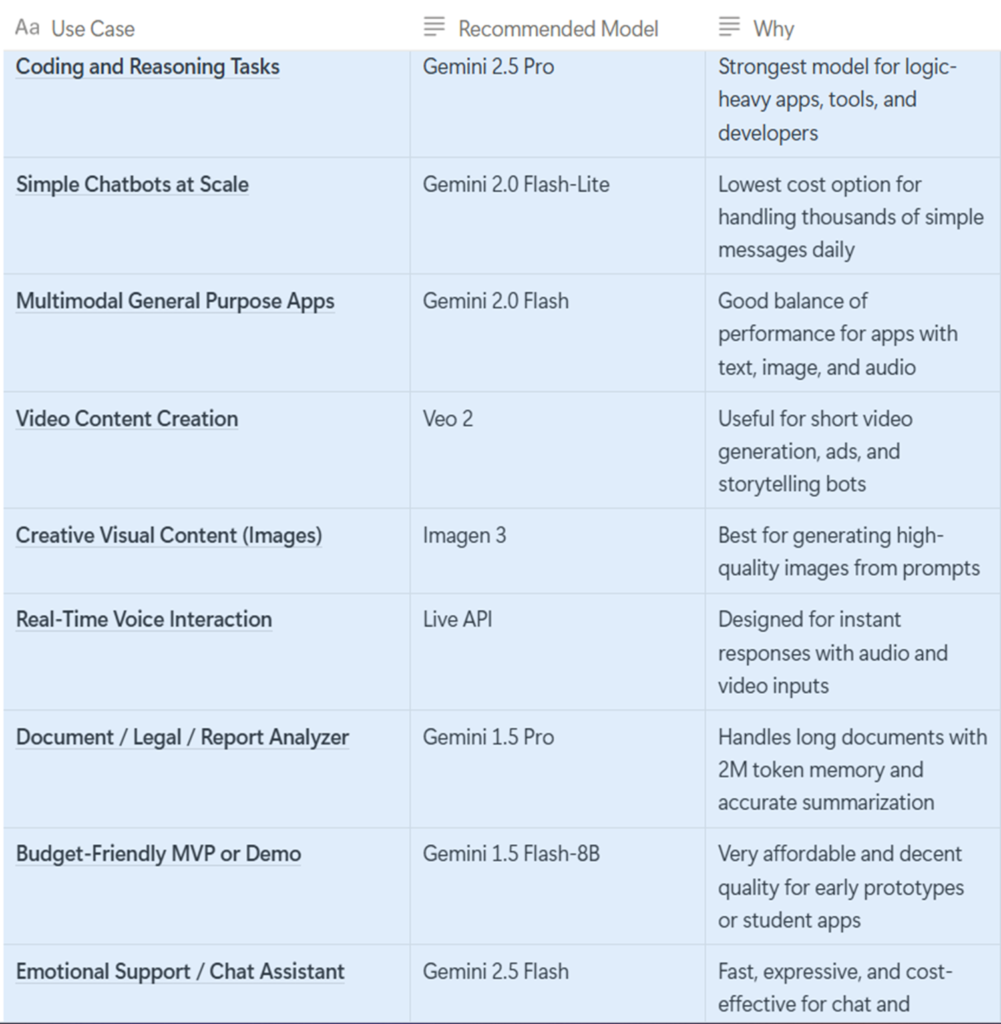
This requirement mapping table links general project types to suitable Gemini models.
I prepared this table using Notion for visual clarity and flexibility. I have attached the screenshot below for reference.
Sample User Flow Diagram
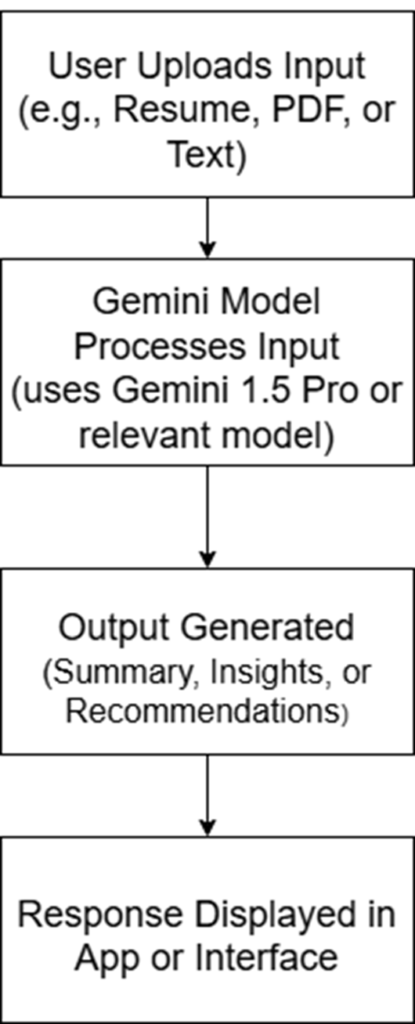
To demonstrate how one of these models fits into a real app flow, here’s a simplified example:
User Flow:
User uploads text or image → Gemini model processes the input → Output (e.g., summary or creative content) is displayed in the app.
I prepared this flowchart using diagrams.net for visual clarity and flexibility. I have attached it below.
Final Tips to Keep in Mind
Here’s a compact checklist that summarizes important considerations:
- Start Small: Use Flash-Lite or Flash-8B for early testing.
- Understand Pricing: Know that both input and output tokens are billed.
- Experiment for Free: Google AI Studio lets you test models before paying.
- Pick Smartly: Choose the model based on task needs — not size or name.
- Visualize and Structure: Tools like Notion and Diagrams.net help you plan before you build.
Downloads
You can download these helpful PDFs for reference:
- Gemini Model Selection Guide (PDF):
https://drive.google.com/file/d/1sS4uJWEggQ8ix_TIfZdl8bF2fOGInPuc/view?usp=drive_link
- Gemini Model Use Case Recommendations (PDF):
https://drive.google.com/file/d/1LBh_vFaX5fMy01HLa_UNW9OT6ylPMawq/view?usp=drive_link
These are structured, beginner-friendly, and serve as a great tool while experimenting or building projects using Gemini models.
Conclusion
Understanding how to match AI models to your goals is a skill that blends logic, clarity, and design thinking. By using structured comparisons, simple flow diagrams, and clearly mapped requirements, you’re not just learning tools — you’re building the mindset of someone who knows how to plan with purpose.
✍️ Author Bio
Linkeidn

Kiruthika Ramalingam
Entry-Level Data Enthusiast | Curious Builder | Beginner-Friendly Tech Blogger
Passionate about breaking down complex topics into simple, human-centred insights.
More Blogs | More about the community | AI Guild | AI Residency| AI for Executives